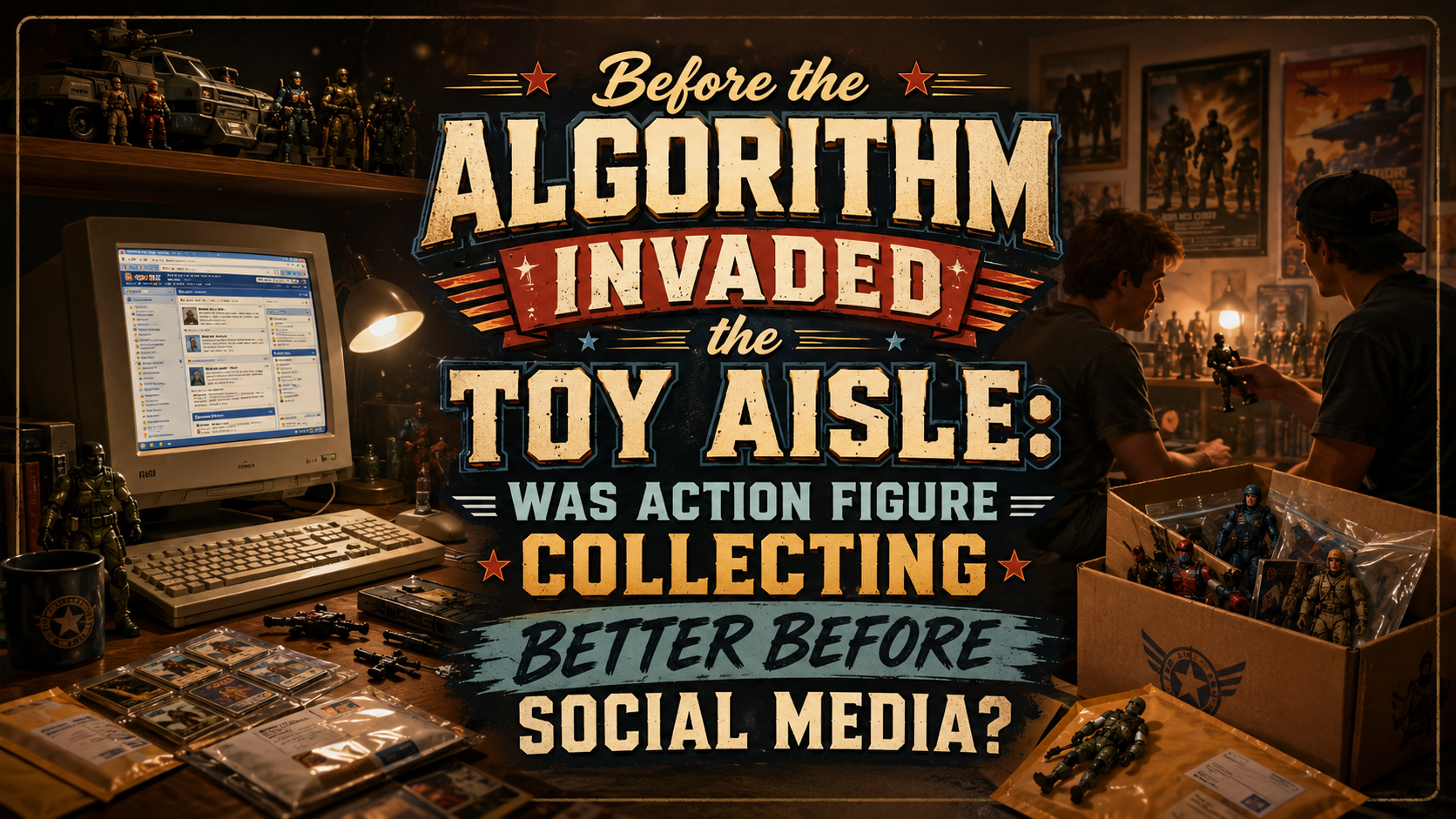
Before the Algorithm Invaded the Toy Aisle: Was Action Figure Collecting Better Before Social Media?
I still remember when finding another serious action figure collector felt like discovering a hidden outpost.
It was the late 1990s, the modem was screaming, the family computer occupied half a desk, and a single photograph of a new figure could take forever to load. Yet those slow evenings online felt exciting. There were no influencers posing beside walls of free products. There were no ten-minute reaction videos uploaded seconds after a reveal. There were only fans, message boards, and the shared thrill of finally locating someone who understood why a complete figure needed the correct rifle, backpack, and file card.
For G.I. Joe collectors, YoJoe.com became our digital headquarters. Its archives helped us identify figures, accessories, vehicles, variations, and release years. The site grew out of the merger of several Joe fan sites in 1997 and became one of the hobby’s most important reference libraries. It was not built around personalities. The collection itself was the star.
Other fandoms had their own gathering places. Rebelscum began in 1996 as a personal Star Wars collecting site before becoming a major news, photo-reference, and community destination. Its “Collect to Collect” code encouraged fans to help one another and discouraged buying toys purely for profit. He-Man.org grew from merged fan sites in 1997, with collectors contributing photographs, information, and forum discussions that built a massive shared archive. Transformers fans found each other through communities such as TFW2005, founded in 2000, while broader toy collectors gathered around sites like Raving Toy Maniac, Fwooshnet, and later Action Figure Insider.
Those forums were not perfect. Arguments happened. Trades went bad. Every community had difficult personalities. However, the conversation usually remained centered on the hobby. A collector posted a want list. Another collector checked a local store. Someone mailed a missing missile across the country for little more than postage. Reputation came from years of fair trades and useful posts—not follower counts, sponsorships, or access to early samples.
Social media changed that atmosphere. Collecting became faster, louder, and more competitive. The algorithm rewards outrage, instant judgment, and endless buying. Every reveal must be declared amazing or terrible before anyone has held the figure. Collections become content. Purchases become performances. Fans worry about saying the wrong thing, losing reach, being reported, or violating constantly shifting platform guardrails. Meanwhile, manufactured controversy travels farther than a thoughtful discussion ever could.
The old internet asked, “What do you collect?”
Modern social media too often asks, “How many people saw you collect it?”
Maybe action figure collecting was better before social media—not because the toys were always better, but because the community felt smaller, slower, and more personal. We were not building brands. We were building friendships, one trade box and one forum post at a time.